
SEO
Schema Markup for Utility-First Websites
A practical JSON-LD guide for online tools, utility platforms, blog guides, metadata alignment, and structured data governance.
Schema Markup for Utility-First Websites
A practical JSON-LD guide for online tools, utility platforms, blog guides, metadata alignment, and structured data governance.

Schema markup gets fragile when a site has many page types and several release paths. A utility page, article, category hub, and product-style landing page may share layout pieces while pulling metadata from different sources. If each page builds JSON-LD independently, schema drift becomes normal.
The visible page may be updated while structured data keeps an old image, stale description, mismatched date, or generic fallback identity. The build may pass because every field exists. The problem is that the fields no longer describe the same entity.
Quick Answer
Schema markup for utility sites should be generated from shared page metadata, resolved images, canonical URLs, visible content, and page type. The output should change when the source page changes, and deployment review should catch cases where it does not.
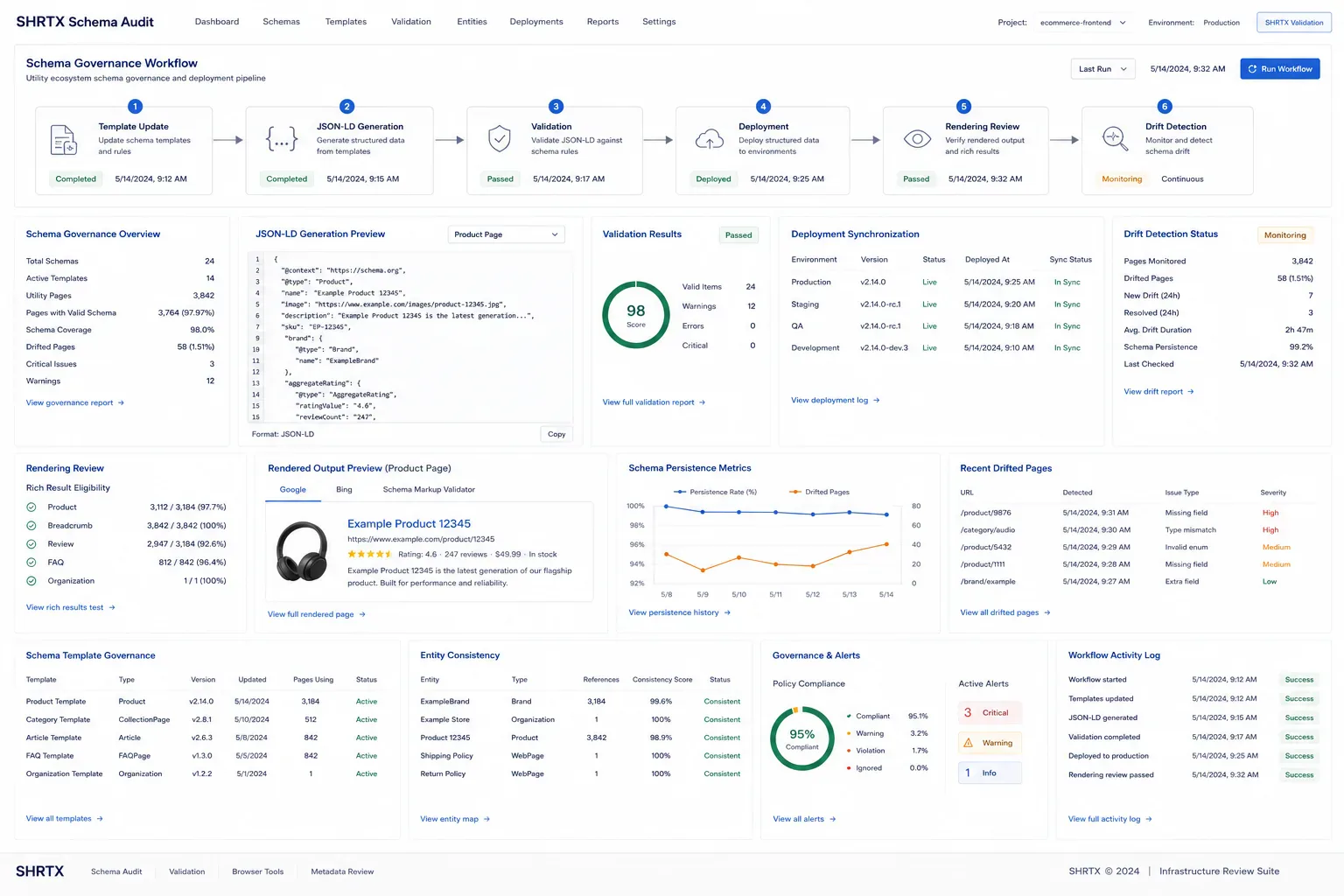
Page Type Is The First Decision
A formatter, checker, generator, analyzer, and article do not need the same schema shape. Tool pages need software context, category, URL, image, and task purpose. Articles need author, date, description, headline, and featured image alignment.
This matters during product upgrades and partial migrations. If Bento Grid Builder receives a workflow-specific page position and image, schema should not keep presenting a generic platform fallback. Metadata, Open Graph, Twitter, and JSON-LD should resolve through the same decision path, not four similar helpers maintained by different owners.
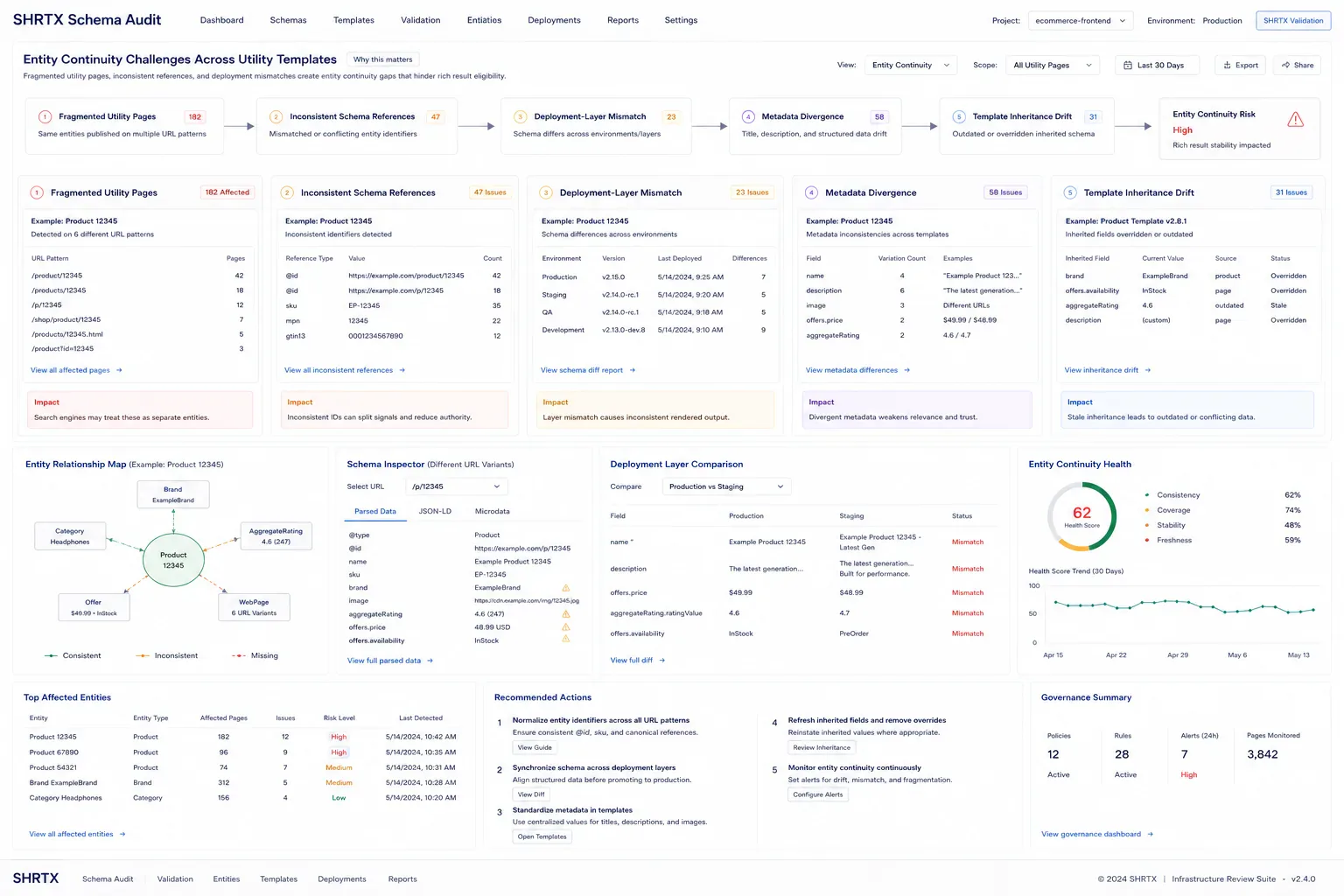
Compare Schema Resolution Models
| Resolution Model | Strength | Operational Risk |
|---|---|---|
| Page-level hardcoding | Fast for one page | Stale screenshots, mismatched descriptions, and owner-specific fixes |
| Global fallback only | Prevents missing fields during build | Generic identity across pages that should carry distinct entities |
| Shared metadata resolver | Keeps schema, OG, and visible metadata aligned | Needs page-type ownership, fixture coverage, and regression checks |
| Build-time validation | Catches missing fields before deployment | Can miss rendered content mismatches without browser review |
Validate The Object Shape Locally
Schema review should happen before the page reaches production, but it also needs to happen after generation. A local JSON-LD object can be inspected, formatted, and reduced before it enters a ticket or deployment review. JSON Formatter & Validator and Schema Markup Generator fit this step when the team needs a browser-native validation pass.
{
  "@context": "https://schema.org",
  "@type": "SoftwareApplication",
  "name": "File Size Analyzer",
  "applicationCategory": "DeveloperApplication",
  "operatingSystem": "Web",
  "url": "https://shrtx.in/tools/file-size-analyzer",
  "description": "Inspect file sizes locally before upload, publishing, or delivery review."
}
The example is intentionally small. The important check is alignment, not field volume. A schema block with fewer accurate fields is easier to maintain than a rich object that drifts away from the page after the next metadata resolver change.
Schema Should Match Workflow Reality
Utility pages often default to generic WebPage schema because it is easy to repeat across hundreds of routes. That misses the difference between upload inspection, file conversion, URL debugging, schema generation, and browser-side text cleanup. The page type should describe the task users can actually perform.
A File Size Analyzer page should describe payload inspection. A SERP Preview Tool page should describe preview review. The schema should not promise capabilities that the visible interface does not show, and it should not collapse distinct utilities into the same bland entity.
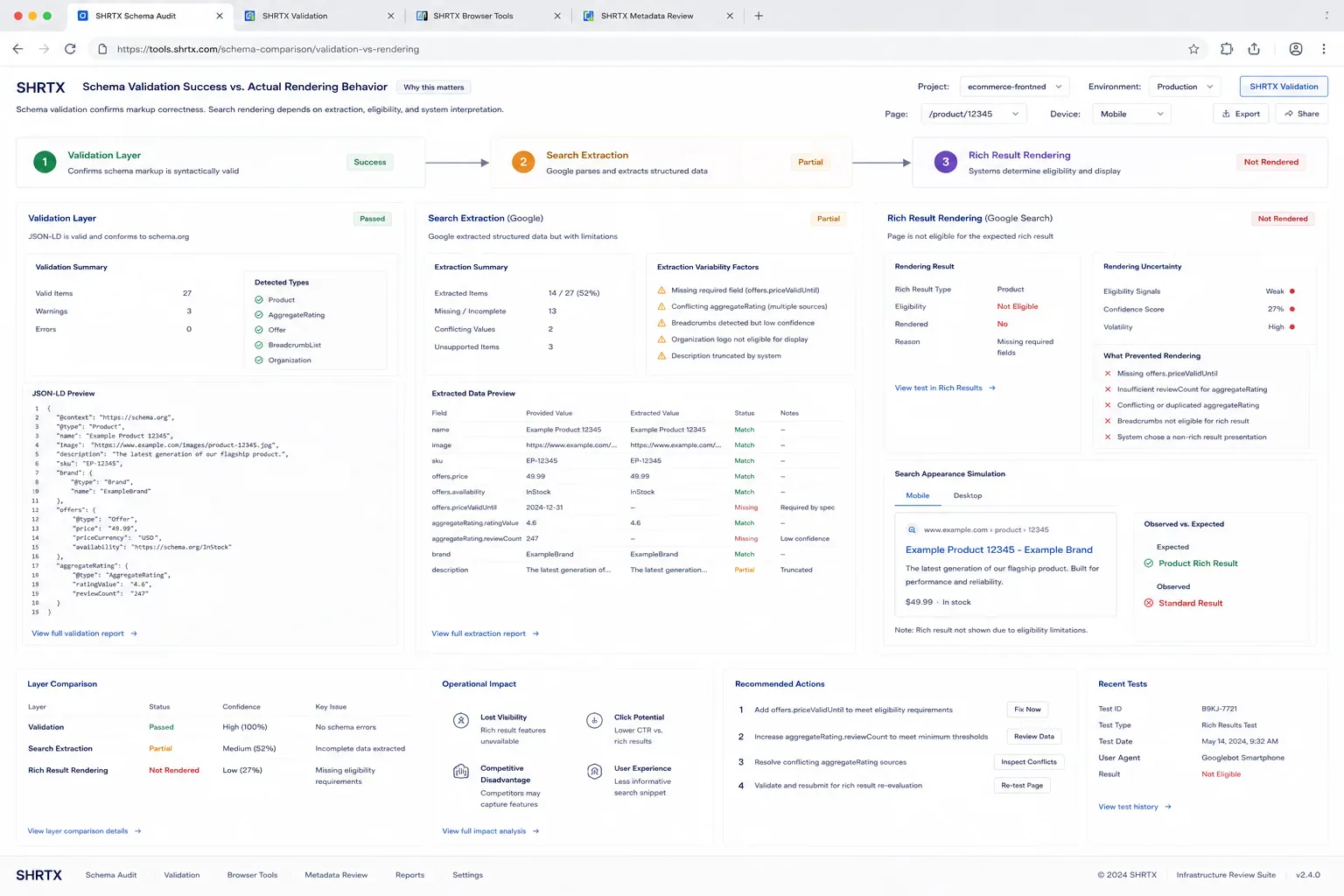
Schema Signals Are Not Display Guarantees
Structured data is a rendering signal, not a deterministic display contract. A page can emit valid JSON-LD and still see partial extraction, no rich result, or different interpretation after deployment. A utility template may expose SoftwareApplication data while a guide wrapper inherits Article fields, leaving search systems to choose only part of the graph.
This is why governance needs preview review as well as syntax validation. Unsupported schema combinations, stale structured-data inheritance, and entity ambiguity across similar utility pages can all pass local checks while rendering inconsistently later. The result can be valid markup that remains unstable because templates disagree about what the page is.
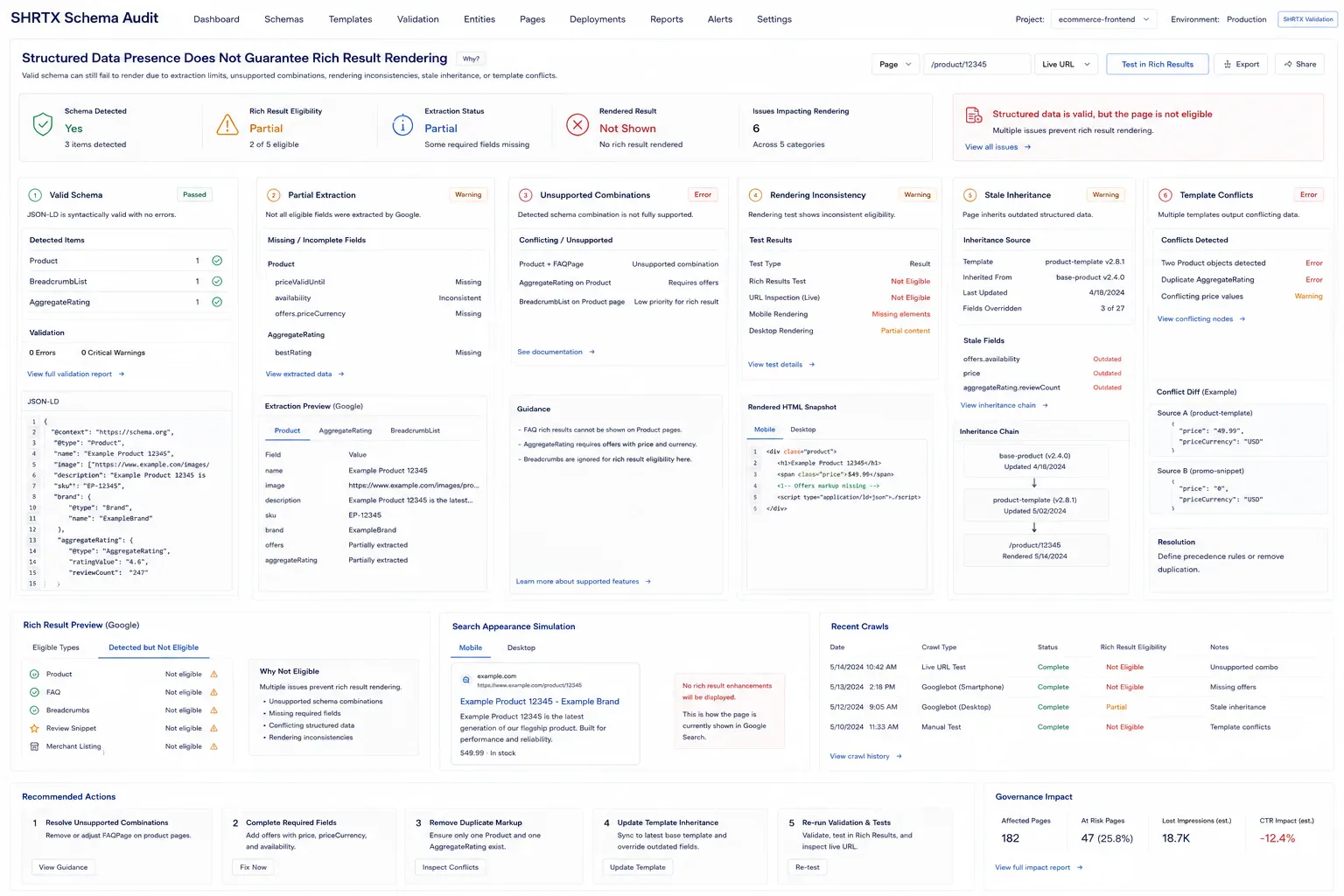
Drift Usually Appears During Iteration
Schema failures often appear after normal improvements. A tool gets a new screenshot, but schema keeps the old fallback. A blog article receives a stronger featured image, but JSON-LD points at the global brand image. A title is tightened in frontmatter, but a page-level object still emits the previous headline.
These bugs are easy to miss because the page still renders and validation may only confirm syntax. This is why schema needs the same resolver logic as metadata. Explicit page image, article feature image, category fallback, and global fallback can be simple, but every surface has to follow the same order.
Review Rendered Output, Not Only Source Code
Build-time checks catch missing fields, but browser review catches mismatches. Hydration, conditional rendering, client-only components, and CMS content can change what the page communicates. The reviewer should compare visible H1, metadata, canonical URL, Open Graph output, and JSON-LD together on the rendered route.
Keep the review result short. Record page type, canonical URL, resolved image, title, description, and any field that still depends on a fallback. That note gives the next update a known boundary when build pipelines, content imports, or image systems change.
Final Takeaway
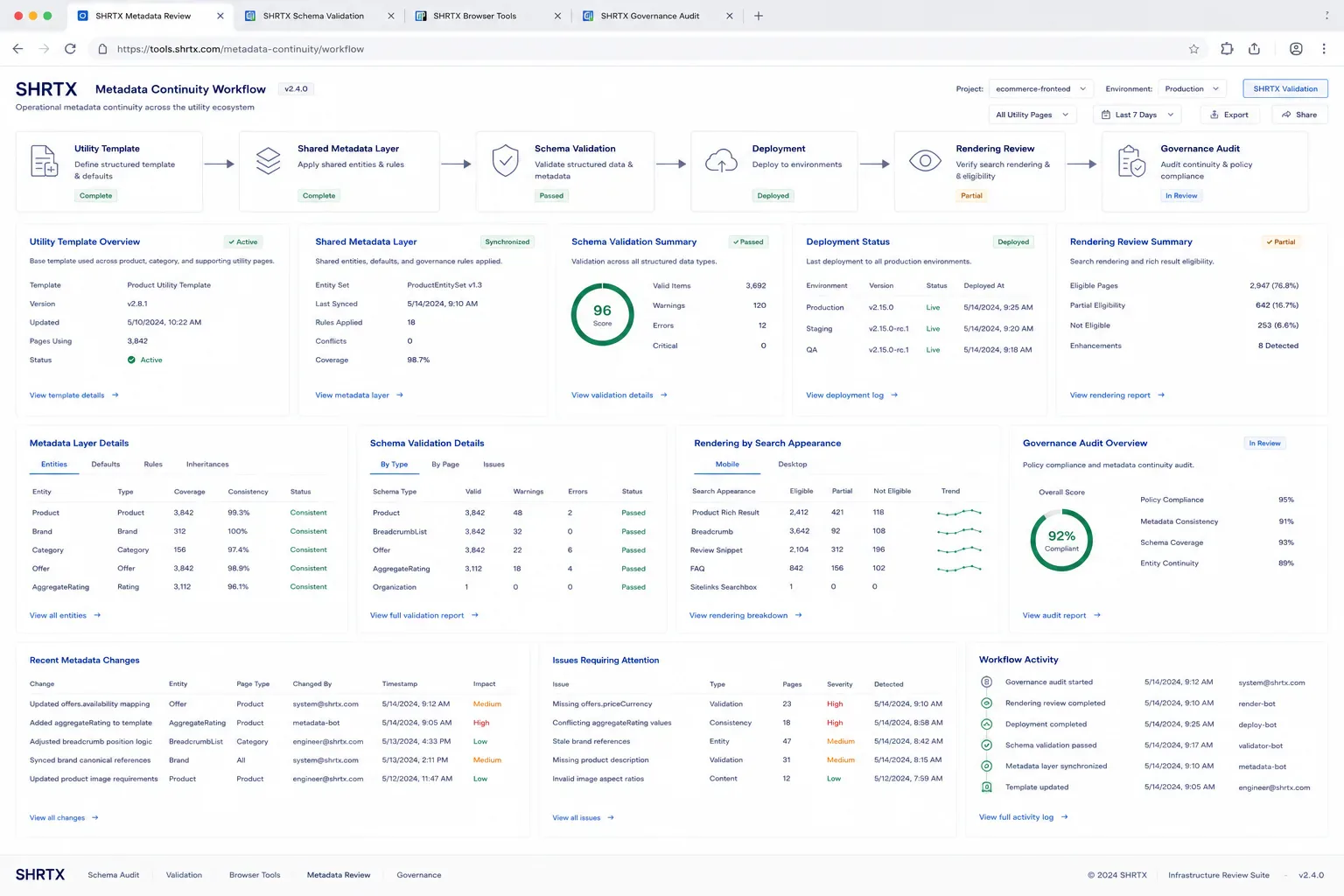
Schema governance is metadata consistency under release pressure. Utility-first sites need shared resolution, page-type ownership, and rendered validation so structured data stays tied to the page users see. Predictable schema comes from fewer generators and clearer sources of truth.
Tools Referenced By Topic
Related Reading
Mar 11, 2026 • 6 min
Auditing Internal Link Equity in Workflow-Heavy Websites
A practical guide to internal link audits for utility platforms, content hubs, tool ecosystems, anchor text, orphan pages, and search discovery.
Feb 21, 2026 • 6 min
Semantic HTML Workflows Beyond Heading Tags
A practical SEO and accessibility guide to semantic HTML structure, landmarks, content hierarchy, schema alignment, and frontend rendering discipline.
Apr 7, 2026 • 6 min
Core Web Vitals in 2026: Operational Workflow Over Score Chasing
A practical Core Web Vitals guide for frontend teams covering LCP, CLS, INP, media payloads, responsive layouts, and deployment validation.